All About LED Technology
RSS-
The TLCI (Television Lighting Consistency Index) metric was developed as an alternative to address the shortcomings of the commonly used CRI when used with photographic equipment.Rather than assessing the performance of a luminaire directly, as the CRI does, the TLCI mimics a complete television camera and display, using only the specific characteristics of cameras and displays that affect colour performance.Yujileds® focuses on providing specific solutions of high TLCI LEDs for photographers and lighting equipment manufacturers for television use.Read now -
LED Phosphors
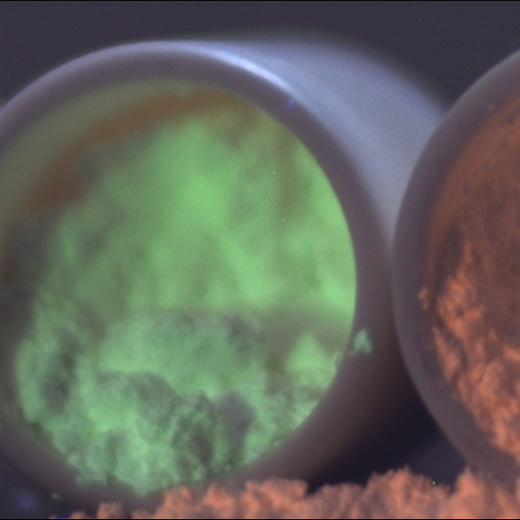
Read nowLED phosphors are a crucial material in the manufacture of white LEDs. Phosphor chemistry and composition largely determine an LED’s efficiency, light quality and stability. Yuji is one of the very few LED companies in the world that has entire LED phosphors and packaging technologies. Multi-variety LED phosphors are the basis for YUJILEDS spectrum simulation.YUJI LEDS Phosphors consistent focus on improving the brightness and stability of red nitride phosphors has allowed us to become an industry leader in providing high CRI LEDs at efficiency levels and stability in line with standard CRI level LEDs on the market.The different types of phosphor have their own characteristics and uses.
-
Different Kinds of White Tunable LED Part.2
Full-Color-Tunable products, also referred to as RGB, RGBA, RGBW, spectrally tunable, or color changing, usually have three or more different LED primaries that can be individually varied in output to create a mixture of light that is white, a tint of white, or a saturated hue.Read now
And white-tunable and full-color-tunable products vary in their type of control, generally using 0–10 V, DMX, or DALI protocols. While each method allows the user to adjust the color and/or output of the product, they can be implemented in a number of ways. -
Different Kinds of White Tunable LED Part.1
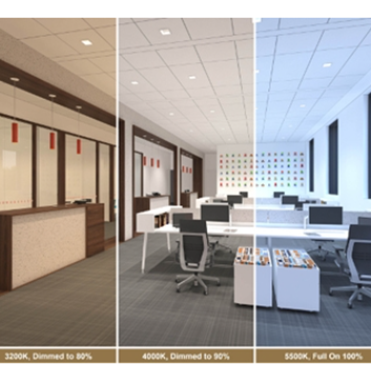
Adjustable white lighting is one of the biggest trends in LED lighting. The dim to warm product imitates incandescent lamps, and as the product darkens, the color of the light becomes warmer and warmer in appearance. Its light color and dimming quality are highly praised in environments such as restaurants, hotel lobbies and guest rooms, banquet halls, theaters, and residential spaces.And white tunable products are very helpful in providing obvious cooling or heating for rooms, assisting in behavior control, supporting human circadian rhythm system, and correcting circadian rhythm disorders.Read now -
MDER, a metric that helps with your lighting design for concentrating
Read nowWhat is MDER and how does it work? MDER is the abbreviation of Melanopic Daylight Efficacy Ratio, which is defined by the CIE and introduced in the CIE S 026/E:2018 document. Also called the Melanopic DER, this metric is invented...
-
Understanding the blue light hazard
Read nowWhat is exactly the blue-ray hazard? Blue light is a kind of high-energy short wave visible light (HEV), which refers to the blue part of visible light. Its harm is mainly concentrated in the 380 nm ~ 450 nm band....
-
What Is CRI?
Read nowDo you sometimes find it difficult to tell a deep navy blue and black apart under a dim light? You thought maybe you need to change the light to a brighter one. No, it is not about the brightness. It is probably just about the CRI.
-
Are CRI and luminous efficacy influencing the photosynthetic photon efficacy?
Read nowCustomers ask for high CRI LED for their plant growth projects at times, and sometimes this confuses us that why a well color rendered LED for human vision is also desired for plant growth? In order to understand this, we...
-
A Deep Tour on LED Phosphor Part III: Performance of Phosphor Based LEDs
Read nowThe Parameters of LED Device 1. Luminous Flux and luminous efficacy LED luminous flux is the amount of light emitted per unit time, and LED luminous efficacy is the LED luminous flux per unit power. They both indicate the luminous...